In writing The Shadow Queen, Mistress of the Sun and the Josephine B. Trilogy, I forged fiction from fact. It’s in the research that a story begins to emerge.
In the decade that it took to write the Josephine B. Trilogy, and the decade that followed learning about 17th century France and the Court of the Sun King, I was constantly researching, constantly searching for answers.
I eventually evolved a method. I needed a way of organizing a mountain of material (without being buried under it).
 Books and other resources
I read broadly: biographies, but mostly journals and memoirs, which I love. The Internet has made it possible to find relatively obscure out-of-print books from used bookstores all over the world. (I use Abe Books.)
Too, a number of out-of-print texts are now available on-line. I consult with historians—and, again, the Internet has greatly facilitated access to experts. A great deal can be learned from special interest groups, as well.
Facts
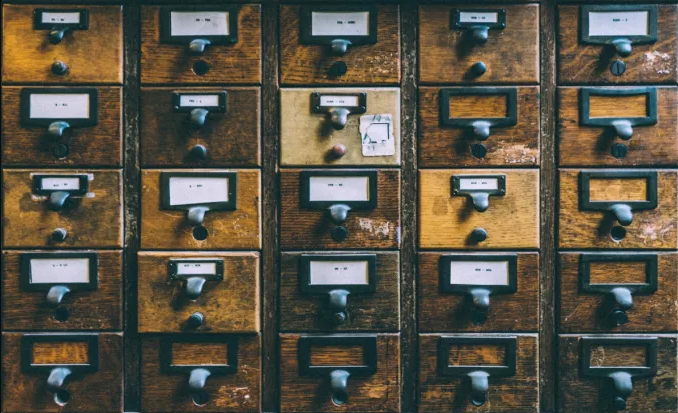
I’ve learned to be methodical about keeping track of information. Each book is assigned a number and listed on a master bibliography. (Here’s the Napoleonic bibliography, for example.) For each reference, I note the book number and page (or URL) so that I can check a fact when necessary.
I record events on a massive timeline, which becomes the backbone of the story. (See “My Research Method” at left for details.) The timeline also allows me to see where historians differ and gives me a basis for judging their claims.
Each character is assigned a file—originally paper, but now on computer. As I come across a reference in a text, I copy it into the character’s file. I find it especially interesting when accounts vary: she’s ugly, she’s handsome, etc.
Experience
It is frustrating writing about a world one can never directly experience. One of the things that drives me in writing about history is an intense desire to find out what it was like in that world — what it felt like.
The closer I can get to the experience the better. In researching the Josephine B. Trilogy, I took lessons in 18th century dance, tried treatments Josephine might have taken at her spa.
To find out what it felt like to wear the fashions of the period, I acquired an historically-accurate copy of an 18th century gown.
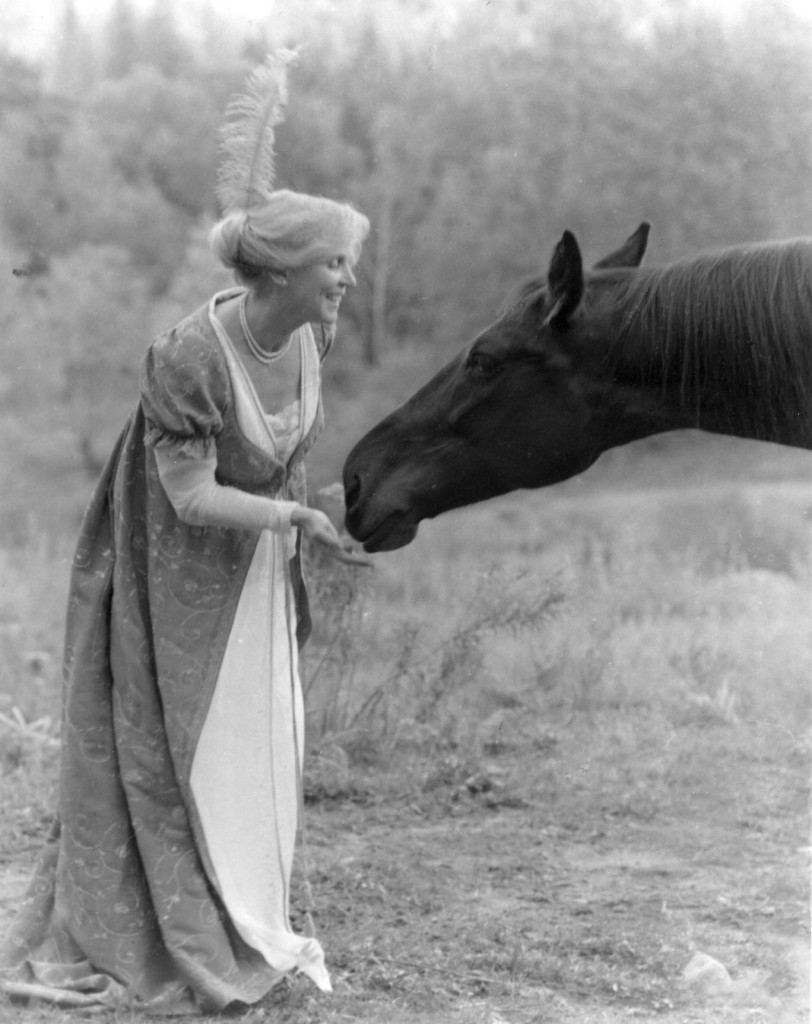
(Photo by Barney McCaffrey.)
I had expected 18th century clothing to be uncomfortable, but in fact it is very relaxed, easy to move in. The Revolutionary period was liberating for men, but also, in many respects, for women—and one can see this in the changes in fashion.
On the publication of Mistress of the Sun, I had a gown made which is very much like one Louise de la Vallière is portrayed wearing. This, too, was a revelation. (Corsets are excellent for posture!)
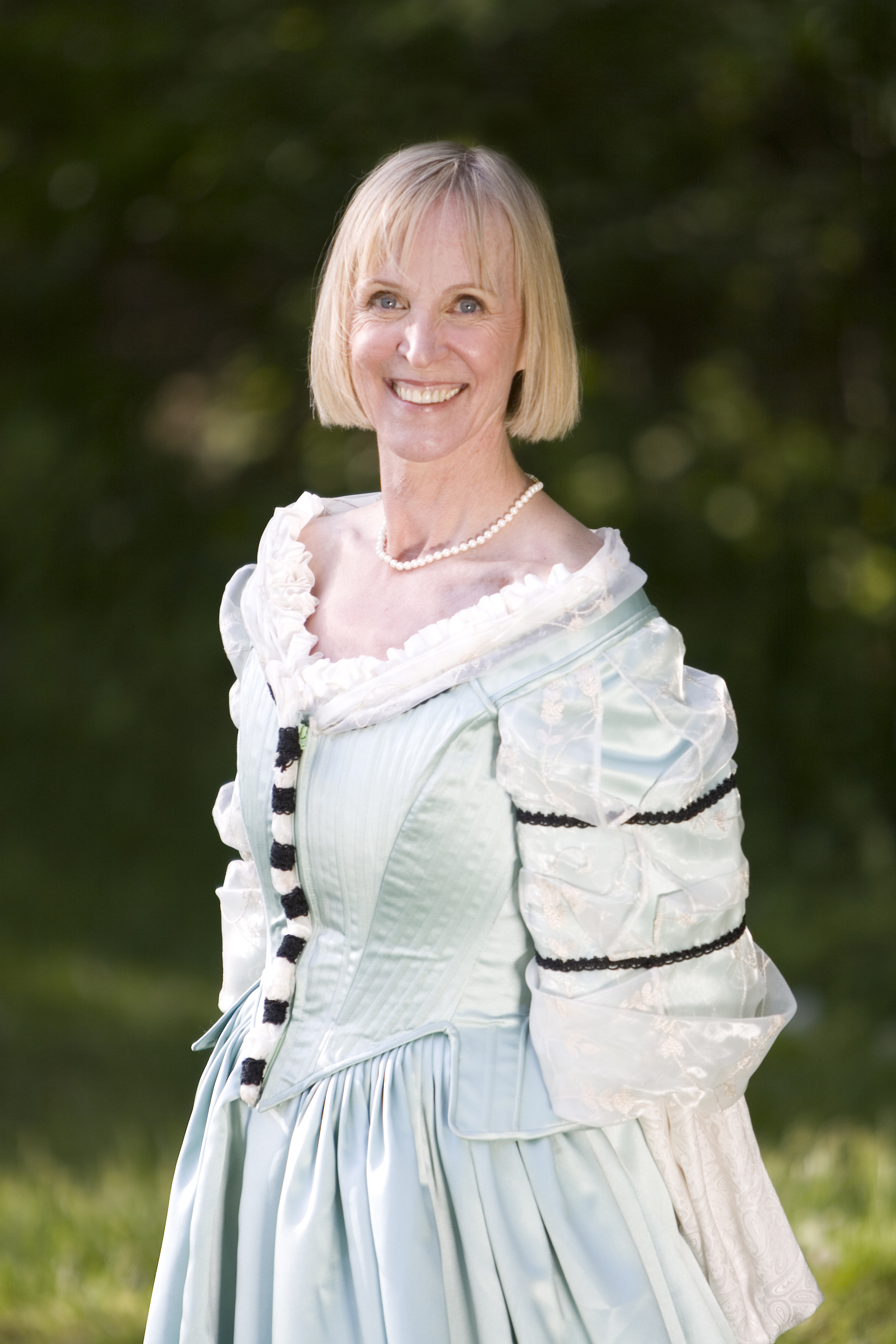
(Photo by James Brylowski.)
Travel
It is essential to see the places I’m writing about. For the Josephine B. Trilogy, I travelled to France, Martinique, northern Italy and Germany seeking the places in which Josephine stayed. (Some were not easy to find.) I’ve been to the prison where she was kept, attended the church she went to as a child, seen where she was born, where she died. By going to the places Josephine lived, walking where she walked, looking out a window as she surely did, she begins to come alive.
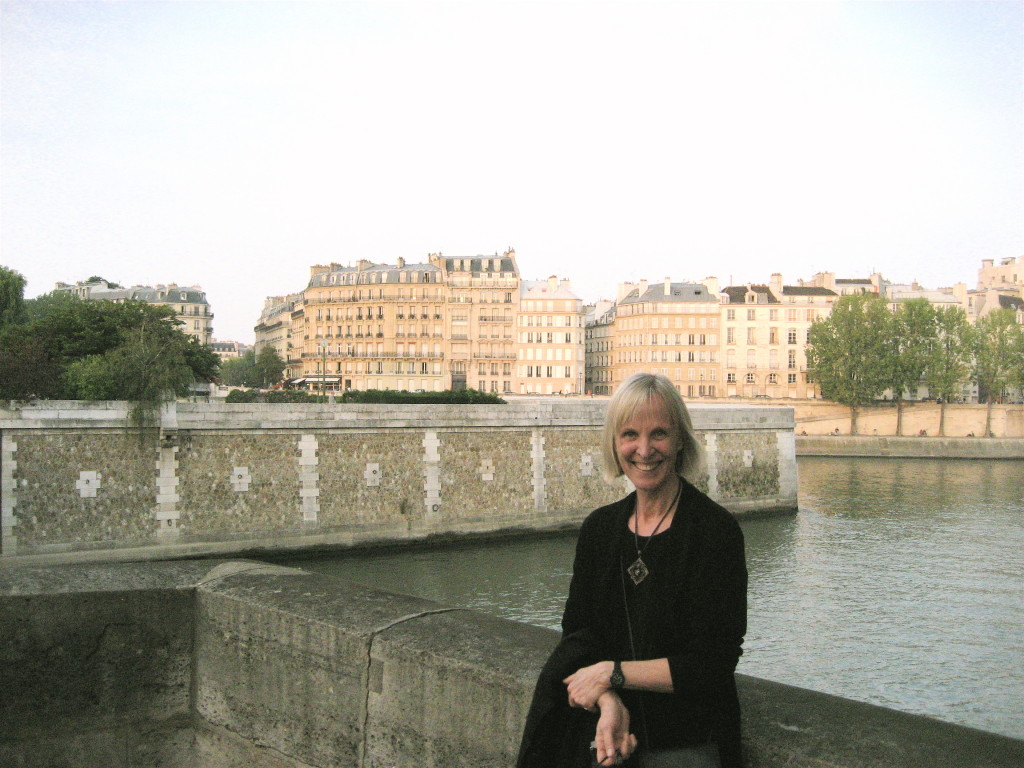
From my journal, September 3, 1990, on my first visit to Paris:
“I long to see horses everywhere, the fine and grubby people. This is my place. The scale of the river is much grander than I had imagined. This corner where I sit: Josephine was here, Aunt Fanny was here—they all were here.”
For research into Mistress of the Sun and The Shadow Queen I spent a lot of time in the Loire Valley, Paris and Versailles.
In spite of all this, I never feel I have been there enough.
For the travelling reader/researcher
A wealth of travel options are available for readers of Mistress of the Sun, which takes place in many of the most beautiful castles of the Loire Valley and Ile de France. (For details, see the map on the Mistress of the Sun page.) And, of course, for both Mistress of the Sun and The Shadow Queen, Versailles is a must!
For readers of the Josephine B. Trilogy, Malmaison has been beautifully restored. It’s a day-trip from Paris. From Malmaison, one can walk to the church of Saint-Pierre-Saint-Paul in the village of Rueil-Malmaison, to see Josephine’s and Hortense’s tombs. The Fondation Napoléon has set out an excellent travel itinerary for visiting Malmaison and other spots of interest in the area.
In Paris, I recommend a visit to the Carmes Convent, where Josephine and her first husband were kept prisoner during the Terror. When I was there, a guided tour was offered that took us deep into the crypts where skulls are on display in glass cases. In the reception area above, one could see the blood stains on the walls from the days of the Terror.
A visit to Plombieres-les-Bains, the spa Josephine frequented, is a delightful experience. It’s still very much a simple mountain village, as it was in Josephine’s day. The food was excellent, the rates more than reasonable, and, of course, the many and varied spa treatments were a delight. (For more on this, read my article, Mud Baths and Dusty Coffins: in Search of Josephine B.)
In Martinique, Josephine’s homestead La Pagerie has been restored for tourists. In Trois-Islets, the church Josephine attended, the Eglise Notre-Dame-d-la-Délivrance, is on the central square.
Related links:
For more on my research process and research in general, go to On Research.
Heroine of a Golden Age
This article by Janice Kennedy gives an excellent overview of my research process in writing Mistress of the Sun.
The PBS miniseries on Napoleon
I was honoured to have been invited to be one of the “featured historians” for the PBS miniseries on Napoleon.
Sites and associations of interest:
The 17th century, and 17th-century France in particular, is a fascinating era, but there are few internet sites for the English-speaking reader. I’ve listed the best of these on Baroque Explorations, my blog on 17th century research.
For those interested in the Napoleonic period, however, there are many resources and associations: The International Napoleonic Society, The Napoleonic Society of America, Souvenir Napoleonien.